ShopDreamUp AI ArtDreamUp
Deviation Actions

Full Access to All
Great way to support me! Full access to all previous and future exclusive content. All my galleries will add new images periodically, don't miss it!
$25/month


Suggested Deviants


Suggested Collections


You Might Like…


Featured in Groups



Description


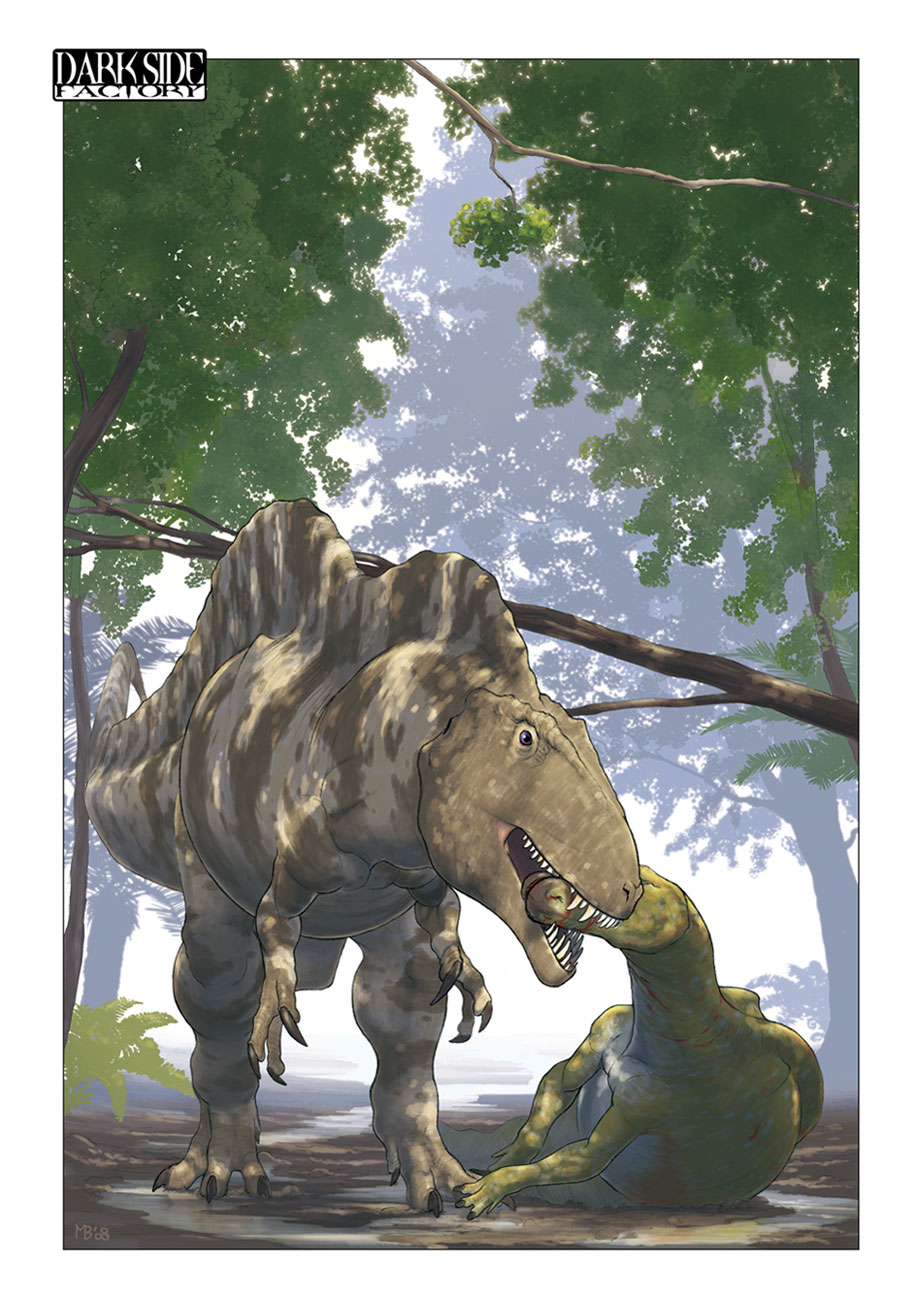
Titolo - Acrocanthosaurus Dinner
Tratto - Matita B
Colore - Digitale
Software - Adobe Photoshop CS
Hardware - Macintosh PowerPC G5
Originale - Matita su carta - 42x29,7
Data - Dicembre 2008
Questa è una tavola pubblicata sul 4° volume della serie Dinosauri di Jaca Book/Abbeville Press.
Il soggetto è Acrocanthosaurus atokensis, probabilmente il più grosso predatore del Nord America durante il Cretaceo Inferiore.
Parente di Allosaurus, fa parte della famiglia dei Carcarodontosauridi, che comprende la maggior parte dei teropodi di dimensioni enormi e recentemente saliti alla ribalta, come Giganotosaurus e Carcharodontosaurus.
Raggiungeva i 12 metri di lunghezza e la sua caratteristica di spicco, come si può notare, era una "vela" che correva lungo tutta la sua schiena, formata da prolungamenti delle vertebre. La funzione di questa "vela" o "gobba" non è chiara.
Riprendendo una mia idea di qualche anno fa, ho voluto rappresentare il dinosauro in un momento che è molto comune tra i grossi predatori attuali – il trascinamento della preda dal luogo di abbattimento ad uno "sicuro" – ma che non viene mai raffigurato nella paleoarte.
Immagino che anche i dinosauri lo facessero.
---------------------------------------------------------------------------
Title - Acrocanthosaurus Dinner
Ink - B pencil
Color - Digital
Software - Adobe Photoshop CS
Hardware - Macintosh PowerPC G5
Original - Pencil on Paper - 42x29,7
Date - December 2008
This painting is on the 4th volume of the series "Dinosaurs", published by Jaca Book/Abbeville Press.
The subject is Acrocanthosaurus atokensis, maybe the largest predator in North America during the Lower Cretaceous.
Relative of Allosaurus and member of the Carcharodontosauridae family – which includes most of the giant sized theropods recently risen to the forefront, such as Giganotosaurus and Carcharodontosaurus.
Up to 12 meters/39 feet long, its prominent feature – as you can see – was a "sail" that ran throughout its back, formed by vertebrae extensions.
The function of this "sail" or "hump" is not clear.
Rearranging an old idea of mine, I wanted to represent the dinosaur in a moment that is very common among present day large predators - dragging the prey from the place of killing to a "safe" place - but that is never shown in any paleoart.
I imagine that also dinosaurs did this.
Image size
916x1299px 231.15 KB
© 2009 - 2024 Kronosaurus82
Comments72
Join the community to add your comment. Already a deviant? Log In
Bbello(con due "b", perché una sola non rende XD)! Se non erro il soggetto della tavola, tempo fa, era Carcharodontosaurs, ma sarebbe stato magnifico anche se ci avessi messo il Gabibbo. XD
Incredibile attenzione ai dettagli anatomici come sempre, ma adoro anche la posa del carnivoro, il modo in cui la luce ricade sulla sua pelle e, ovviamente, la scena che hai deciso di raffigurare: in effetti non è una cosa che si vede tutti i giorni, neanche su DA. XD
Belli anche i colori e il modo in cui il predatore tiene sollevata la coda! Mi dispiace soltanto per la fine che ha fatto quel povero Iguanodontide. : D
E dire che, proprio ieri sera, ho visto un orribile pseudo-documentario su Acrocanthosaurus atokensis! Niente a che vedere col tuo lavoro.
Incredibile attenzione ai dettagli anatomici come sempre, ma adoro anche la posa del carnivoro, il modo in cui la luce ricade sulla sua pelle e, ovviamente, la scena che hai deciso di raffigurare: in effetti non è una cosa che si vede tutti i giorni, neanche su DA. XD
Belli anche i colori e il modo in cui il predatore tiene sollevata la coda! Mi dispiace soltanto per la fine che ha fatto quel povero Iguanodontide. : D
E dire che, proprio ieri sera, ho visto un orribile pseudo-documentario su Acrocanthosaurus atokensis! Niente a che vedere col tuo lavoro.